
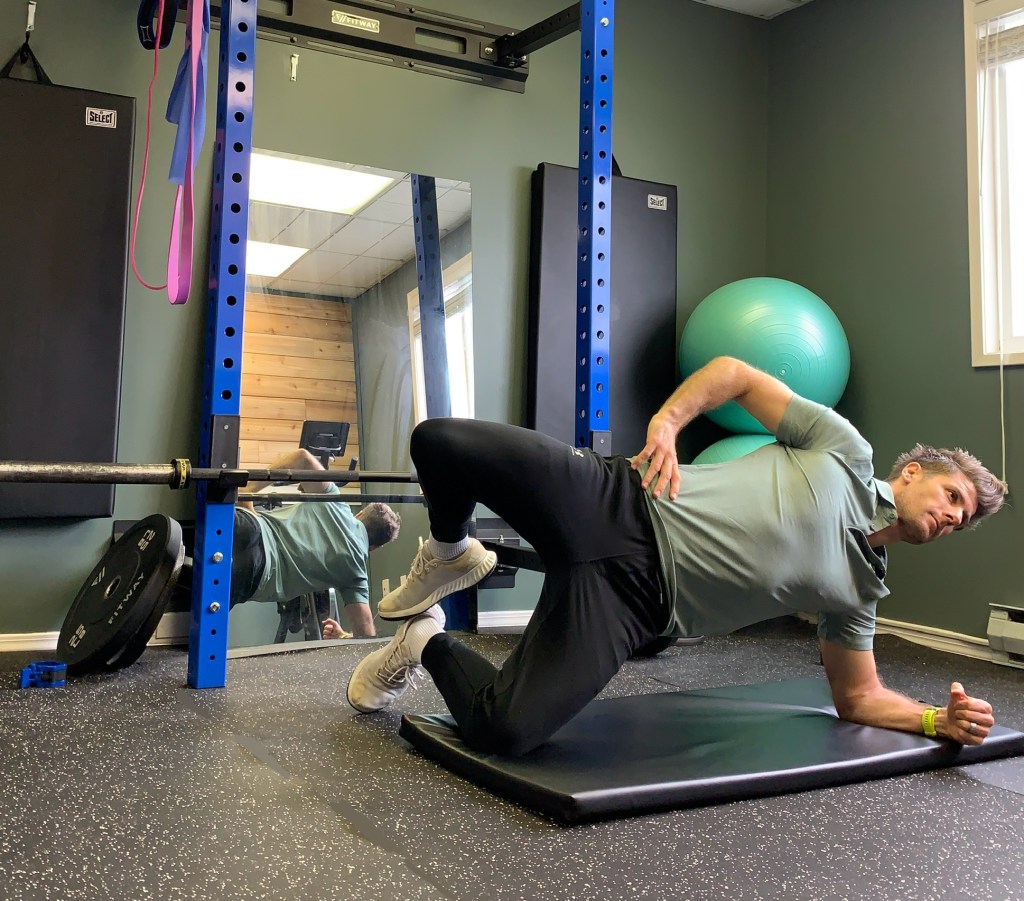
38 expert researchers and clinicians from North America, Europe, and Australia/New Zealand attended the International Hip-Related Pain Research Network. At the end of the meeting, they gave 6 recommendations for clinical practice for individuals struggling with hip pain:
- Exercise -based treatments are recommended for people with hip-related pain:
- Strengthening the hip, trunk and improving a person’s functional abilities leads to improvement in pain, function, and Quality of Life.
- Other important components are improving Hip Range of Motion and biomechanics when putting together a treatment plan.
- Exercise-based treatment should be at least 3 months in duration:
- Treatment lasting at least 3 months has a larger effect than those lasting less than 7 weeks.
- Practitioner-Lead rehab after hip surgery should be undertaken:
- By starting your rehab promptly after hip surgery shows immediate improvements in patient outcomes.
- 6 months after surgery, patients report lower hip and trunk strength, dynamic balance, poor single leg squat alignment, alterations in gait, and diminished ability to jump or run effectively.
- Therefore, these are important impairments to target early in the rehab process.
- Patient-reported outcome measures, measures of physical impairment, and measures of psycho-social factors should be used to monitor response to treatment:
- Precise monitoring of patient’s responses to treatment is important to quantify whether they are improving or not. Some great tools are questionnaires like HAGOS and IHOT.
- Strength, range of motion, movement quality, and functional task performance are all key measures that helps understand the effectiveness of treatment.
- Physical activity (including sport) is recommended for people with hip-related pain:
- Physical activity is critical for health and prevent lifestyle diseases. By keeping physically active, it also helps in returning to sport.
- Acceptable return to full activity needs to be a shared decision-making process between practitioner and patient with an emphasis on a safe and gradual return.
- First focus on Cardiorespiratory fitness, strength, basic athletic movement before higher intensity sport specific movements and sport specific training.
- Clinicians should discuss patient expectations, use shared decision-making, and give education:
- The patient needs to be aware of all the treatment choices available, possible benefits and harms of each treatment, and the likely outcome if no treatment us undertaken. By having all this information, the patient better equipped for the decision-making process.
- Key points to discuss can include Risk of surgery or non-surgery; the magnitude of improvement, and the duration and cost.
If you have been for hip surgery recently (or a while back), or if you are struggling with Hip-Related Pain, book an assessment with me to help understand what impairments need improving. Remember, You were made to THRIVE.
Email me at travis@tmkin.ca for more information.
 TRAVIS MICHELSON KINESIOLOGY
Leave a comment